Semi-weekly Reflection
Week 4 – Writing Process
So far in this course, several tools have helped improve my writing process. One of the most helpful strategies has been learning how to plan before writing through brainstorming, outlining, and drafting. These steps helped me organize my thoughts and develop a clearer main idea before starting an essay. Instead of feeling overwhelmed, I was able to break my writing into manageable steps, which made the process less stressful and more effective.
Another helpful part of the writing process was peer review and instructor feedback. Reading other students’ work and receiving feedback on my own writing helped me notice areas where I needed to improve, such as clarity, structure, and evidence. What was confusing at times was how to fully revise an essay instead of just fixing grammar. If this clarification does not happen during class, I plan to reread feedback carefully, look at examples, and ask questions during office hours to improve my revision skills.
Week 6 – Rhetorical Situation of Learning Analysis
The Learning Analysis essay is an academic reflective essay that focuses on my development as a writer. The purpose of this essay was to analyze how my writing skills have grown over time using specific course artifacts as evidence. The intended audience is my professor and other academic readers who are interested in understanding my learning process within this course. The context is a college-level composition class that emphasizes reflection and rhetorical awareness.
I believe I successfully met the goals of the assignment by clearly explaining my learning process and supporting my claims with examples from my work, such as drafts, peer feedback, and revisions. One personal goal I set was to be more specific and reflective rather than vague, and I think I improved in that area. Writing this essay helped me better understand how reflection can strengthen both writing and learning.
Week 7 – Annotating Research
For my research project, I annotated an article related to my topic. In my annotations, I summarized the author’s main ideas, highlighted key terms, and noted quotes that could be useful in my essay. I also wrote questions and comments in the margins to help me better understand the argument and evaluate the source’s credibility.
Annotating helped me slow down and actively engage with the article instead of just reading it quickly. It made it easier to remember important points and later integrate the source into my writing. What I still need to do is compare this article to other sources to see how they connect or disagree. This will help me strengthen my argument and better synthesize my research.
Week 8 – One Learning Objective
One learning objective I have developed this semester is using evidence effectively to support my claims. At the beginning of the course, I often included quotes without fully explaining them. Through class discussions, feedback, and practice, I learned how to introduce, analyze, and connect evidence to my main ideas.
I have grown in this area by practicing source integration in multiple assignments, especially the Research-Informed Essay. Now, I make sure my evidence supports my argument and is explained in my own words. This skill has helped make my writing clearer, stronger, and more persuasive.
Week 9 – Research Sources
For my research project, I used multiple types of sources, including scholarly articles, news articles, and other credible media. Each type of source contributed something different to my understanding of the topic. Academic articles provided in-depth analysis and theory, while news and media sources helped connect my topic to real-world issues.
Using different media formats strengthened my writing by giving me multiple perspectives. It also helped me think more carefully about audience and credibility. These sources supported my writing work by allowing me to build a more informed and balanced argument.
Week 10 – Integrating Theory
The theories related to my research focus on how information, health, and systems affect individuals and communities. These theories helped frame my research by giving me a deeper understanding of why the issue matters beyond personal experience. They allowed me to connect my topic to larger social and academic conversations.
Integrating theory into my writing was challenging at first, but it helped strengthen my argument. Instead of just presenting facts, I learned how to explain why those facts matter. This made my research essay more analytical and academically grounded.
Week 11 – Rhetorical Situation of the Research-Informed Essay
The intended rhetorical situation of my Research-Informed Essay is academic and persuasive. The purpose is to inform readers about my research topic while also presenting a clear, evidence-based argument. The audience includes my professor and other academic readers interested in the subject. The context is a college writing course focused on research and analysis.
To make this rhetorical situation a reality, I needed to use credible sources, maintain a formal tone, and clearly structure my essay. I also focused on integrating evidence smoothly and explaining its relevance. These choices helped me meet the expectations of the assignment.
Week 13 – Argument Evolution
As I continued my research, my argument evolved significantly. At first, my ideas were broad and mostly based on personal opinions. As I read more sources, I refined my claim and focused on specific aspects of the topic supported by evidence.
Research helped me see new perspectives and adjust my argument to be more precise and convincing. This process showed me that strong arguments develop over time and improve through research and revision.
Week 15 – Uses of Information
The relationship between my Research-Informed Essay and my Multi-Modal Translation (MMT) is that they communicate the same core ideas but in different ways. The research essay is written for an academic audience and focuses on detailed analysis and evidence. The MMT is designed for a broader audience and presents the information in a more engaging and accessible format.
The rhetorical situation of each project is different. The research essay prioritizes depth and formality, while the MMT prioritizes clarity, visuals, and audience engagement. Comparing these two projects helped me understand how information can be adapted for different purposes and audiences.
Week 16 – Your Writing Growth
Throughout this semester in ENG 110, I learned several skills that significantly improved my writing process. One of the most useful lessons was understanding that writing is a process that involves planning, drafting, revising, and reflecting. Using outlines and feedback helped me stay organized and improve the clarity of my essays.
I also grew in my ability to work with sources by annotating, evaluating credibility, and integrating evidence into my writing. Learning about rhetorical situation helped me become more intentional about audience and purpose. Overall, I have become a more confident and thoughtful writer, and these skills will continue to help me in future college courses and beyond.
Artifacts
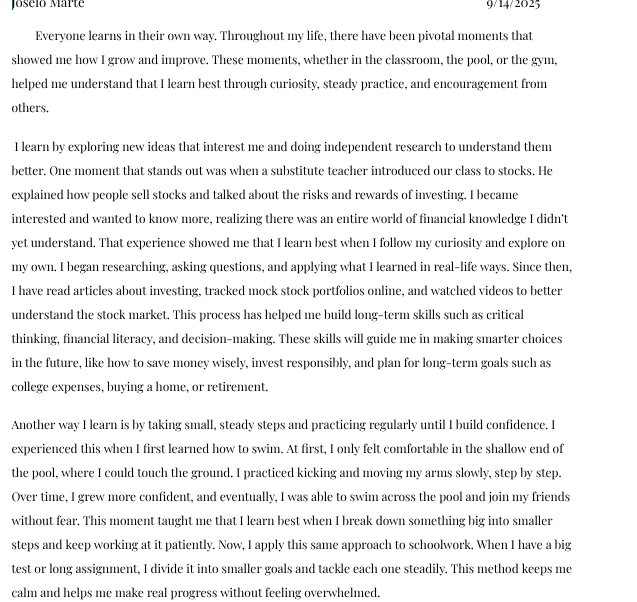
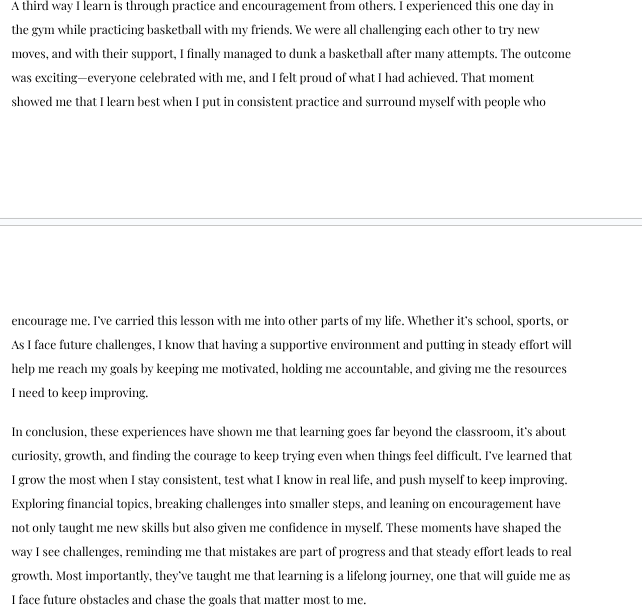
The draft of my Learning Analysis helped me reflect on how my ideas developed over time. It showed where I needed to clarify my thoughts and how revisions improved the organization and depth of my reflection.
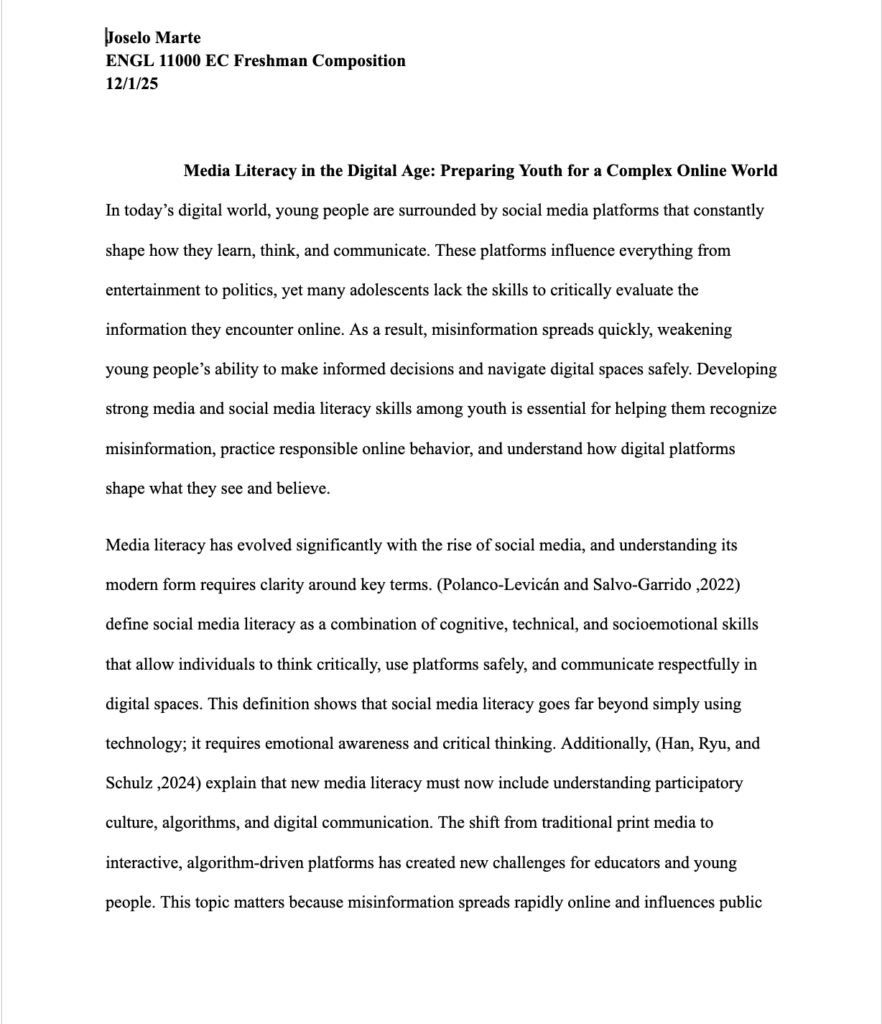
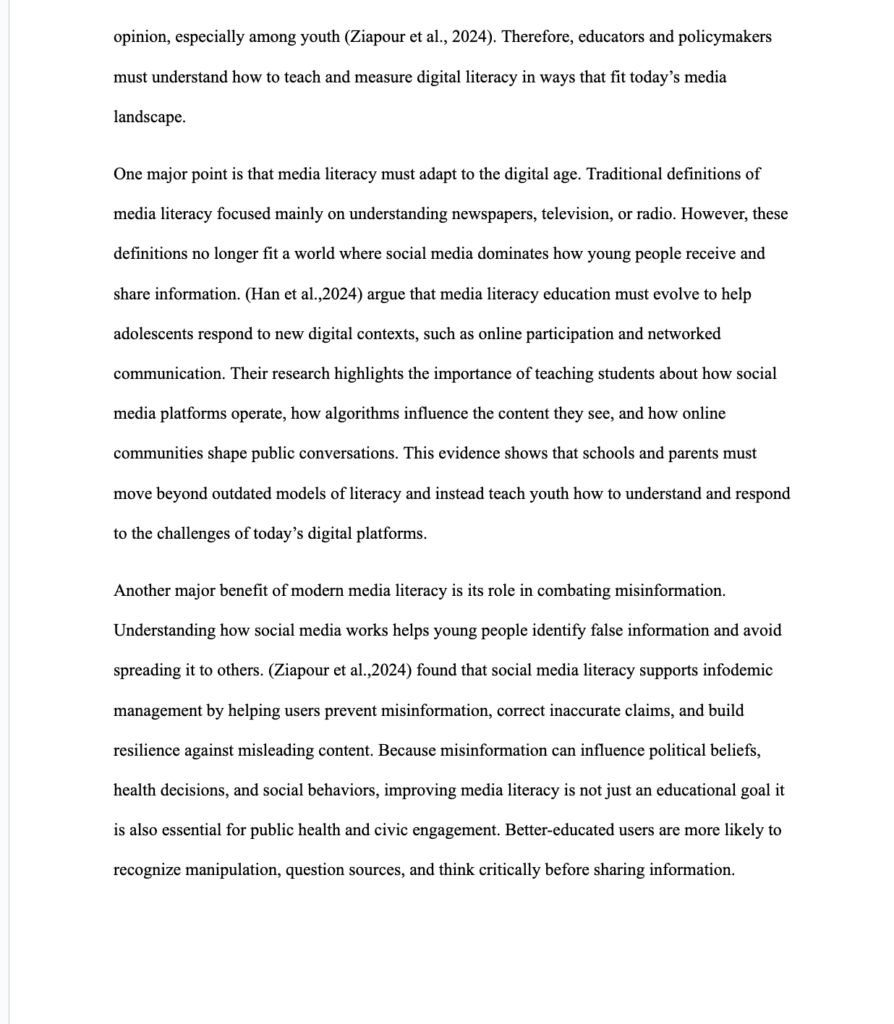
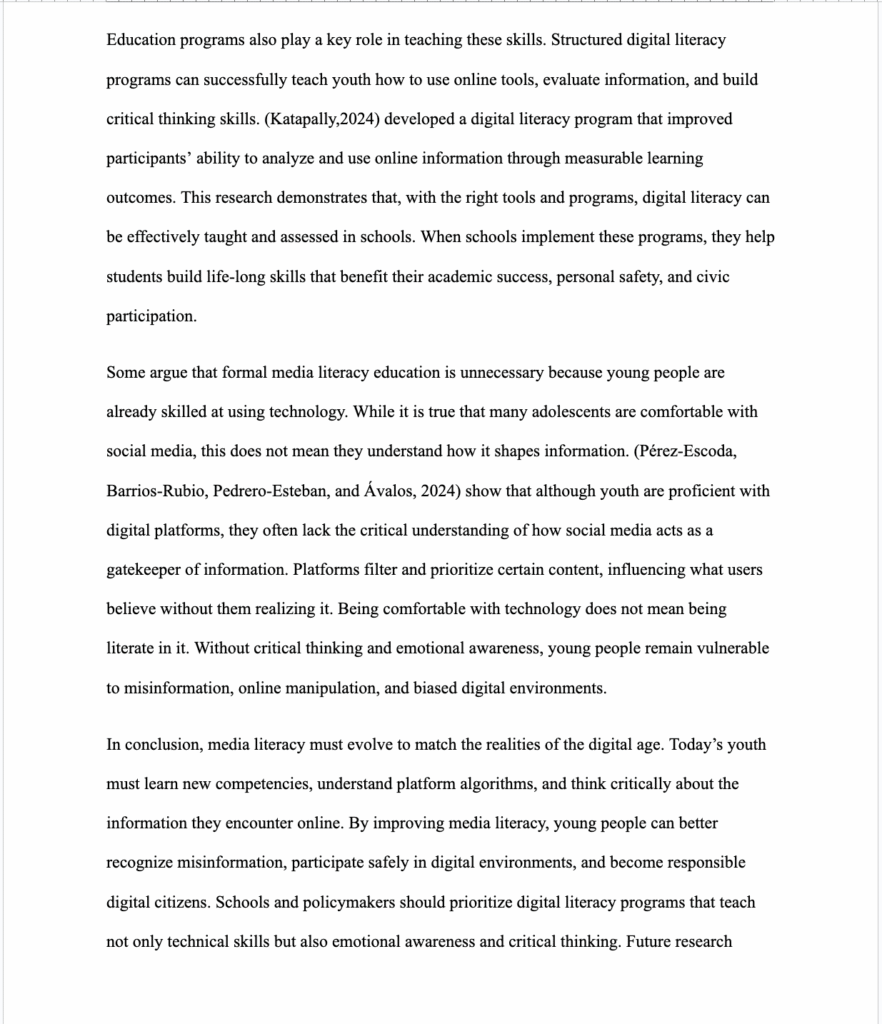
The final version of my Research-Informed Essay shows how I applied feedback, revisions, and careful planning to strengthen my argument. It demonstrates my growth in organizing ideas, integrating sources effectively, and communicating my research clearly to an academic audience.
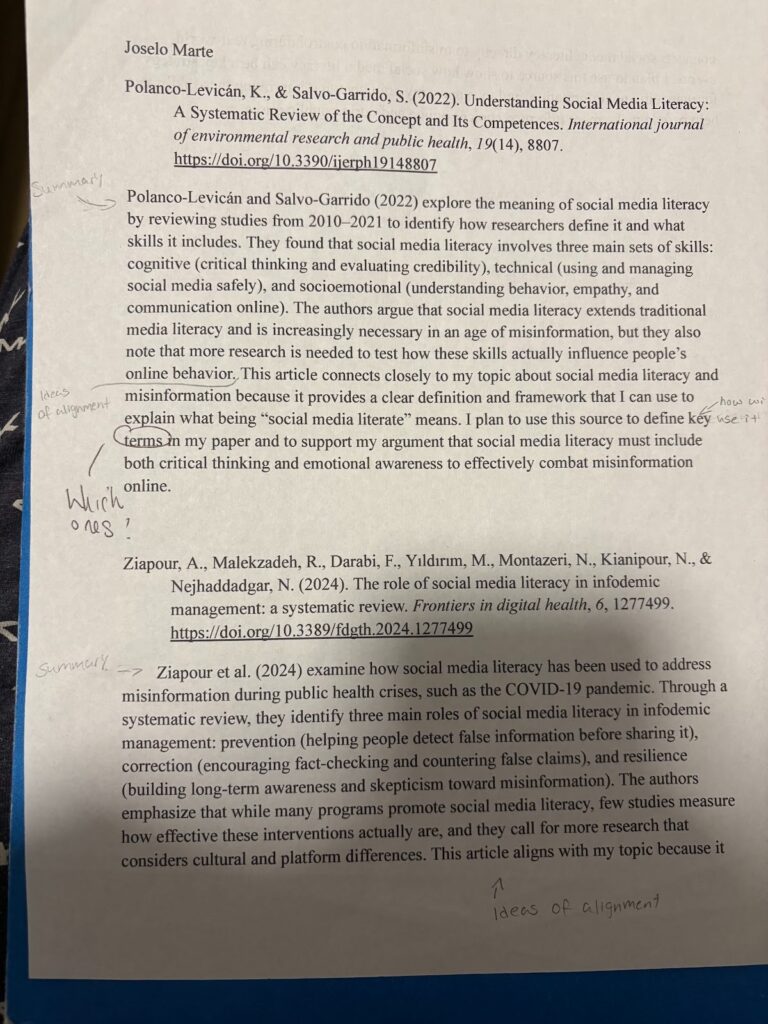
The draft of my annotated bibliography helped me practice summarizing sources and evaluating their credibility. It gave me material to reflect on how my research skills improved throughout the semester.
Peer review helped me see how others interpreted my writing and identify areas that needed improvement. My peers specifically suggested that I clarify my thesis, explain my evidence more thoroughly, and improve transitions between paragraphs to make my argument easier to follow.
Instructor feedback helped me identify both strengths and areas for growth in my assignments. It guided my revisions, showed me strategies to improve my clarity and organization, and gave me insight into how my writing was developing over the semester.

This entry is licensed under a Creative Commons Attribution-NonCommercial-ShareAlike 4.0 International license.

